Marc Lenot
In 2005, after a career as an economist following his studies at the École Polytechnique and the Massachusetts Institute of Technology, Marc Lenot (b. 1948) reinvented himself as an art critic. Since then, he has been writing an online reference blog on contemporary art, Lunettes Rouges, which during 19 years was published by Le Monde (https://lunettesrouges1.wordpress.com). In 2009, he obtained a Master’s Degree from the School of Advanced Studies in Social Sciences (EHESS) in Paris with a thesis on the Czech photographer Miroslav Tichý. In 2016, he obtained a Ph.D. from the University of Paris Sorbonne with a doctoral thesis on contemporary experimental photography, partly based on Flusser’s concepts. His book on the same subject, Jouer contre les Appareils, was published in June 2017 by Éditions Photosynthèses in Arles (http://photographie-experimentale.com/). He was the first “digital” member of AICA (International Association of Art Critics) in France, and in March 2014, competing with nine other French art critics, he won the AICA France Art Criticism Prize, awarded by an international jury. He is the main coordinator of the website Flusser France (https://flusserfrance.eur-artec.com/) and has published several essays on Vilém Flusser; he was the co-editor of Flusser Studies nº 31. Marc Lenot lives between Paris and Lisbon.
Articles of Marc Lenot
Hallucinations techno-imaginaires : une critique flussérienne des systèmes d'IA générative / Tecnoimaginando alucinações : uma critica flusseriana aos sistemas de IA generativa
The article examines so-called hallucinations in generative artificial intelligence models through the lens of Vilém Flusser’s philosophy of technology, interpreting them not merely as technical failures but as revealing symptoms of the structure and normativity of these systems. Drawing on Flusser’s notion of the apparatus as a black box, the article establishes a parallel between the photographic apparatus and AI models, whose internal functioning remains opaque to both users and developers. The text critiques the anthropomorphic use of the term “hallucination,” arguing that it euphemizes systemic errors and obscures their epistemological presuppositions. In contrast, hallucinations are understood as productive failures capable of exposing biases, regimes of truth, and economies of meaning within generative models. Mobilizing the concept of techno-imagination, the article analyzes artistic and poetic practices that deliberately explore these deviations as ways of playing against the apparatus’s program. It concludes that such practices establish zones of friction in which provisional modes of critical freedom vis-à-vis contemporary apparatuses can still be rehearsed.
‘La caméra photographique est une intelligence artificielle’ Occurrence of the Notion of ‘Artificial Intelligence’ in Vilém Flusser’s writings
This essay is simply a compilation of the occurrences of the words “artificial intelligence” in all languages in Flusser’s writings. For lack of access to a global database, it is not exhaustive. It includes all occurrences in the French languages, and occurrences in other Flusser’s works that could be analyzed online in Portuguese, English and German. Flusser has used these words between 1982 and his death, in a variety of contexts, and with different meanings. Clearly, they have little to do with the meaning of AI today. While it is difficult to define a pattern of use of these words in his work, some of the quotations are noteworthy.
(Un peu moins de) 20 ans avec Flusser / (A little less than) 20 years with Flusser
Flusser était-il féministe? / Was Flusser a Feminist?
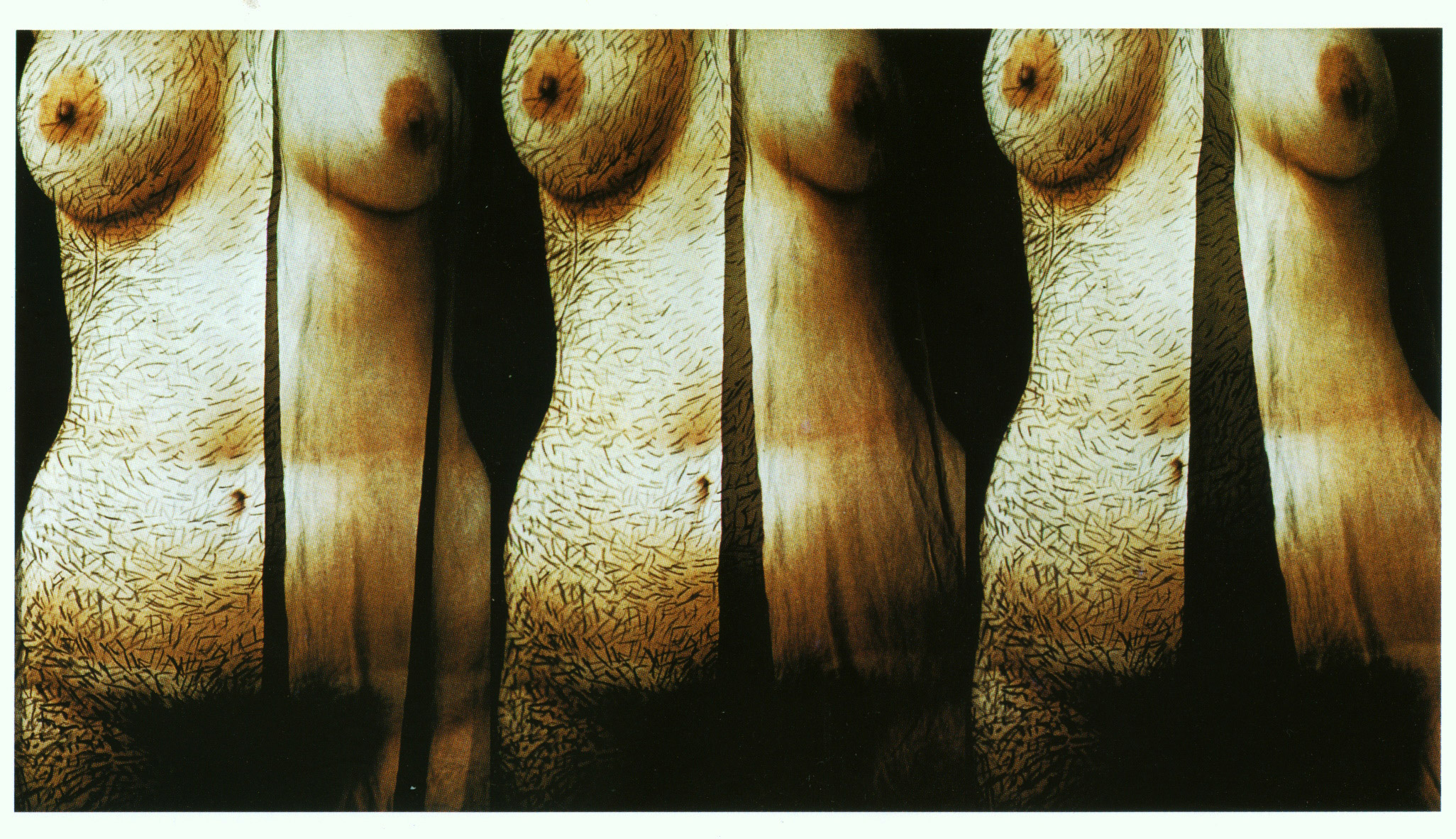
One would not spontaneously associate these two words, Flusser and feminism. Many testimonies point to Flusser’s machismo in his personal life: his relationship with Edith was rather traditional, one could even say patriarchal. But, while his personal behavior could not be qualified of feminist, the two texts, presented in this essay, point to a very modern and even somewhat revolutionary view of the relationship between men and women. The first one is his contribution to a book about love, edited by his friend Alexandre Bonnier; the second is his critique in European Photography of the work of the Greek photographer Lizzie Calligas. Flusser acknowledged forcefully that the adoption of a feminist point of view is an intellectual and moral necessity: by subjecting women’s bodies to their own bodies, men have criminally repressed women and prevented a dialogue in favor of a male monologue, thus making men and women strangers to each other, even though they may love each other. Such a point of view would force us to redefine the meaning of the word ‘love’.
Premier discours, premier article et première interview de Flusser en français : au sujet de la 12e Biennale de São Paulo
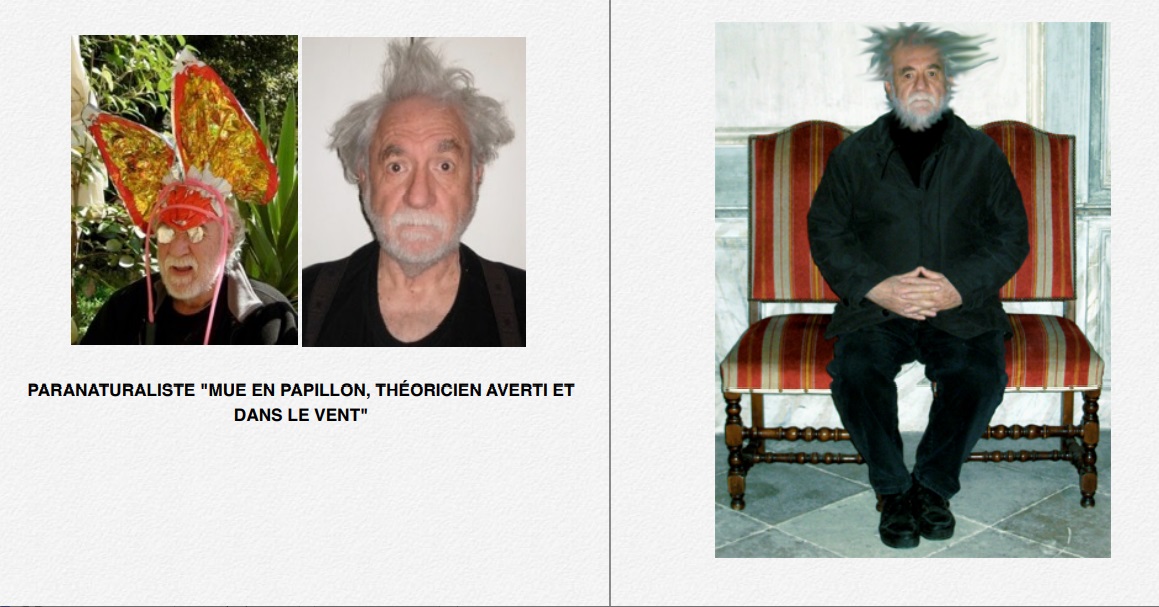
En hommage à Louis Bec (1936-2018)
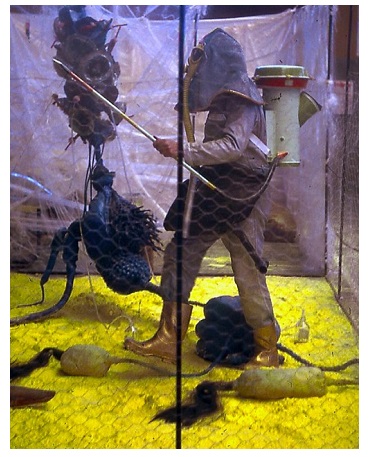
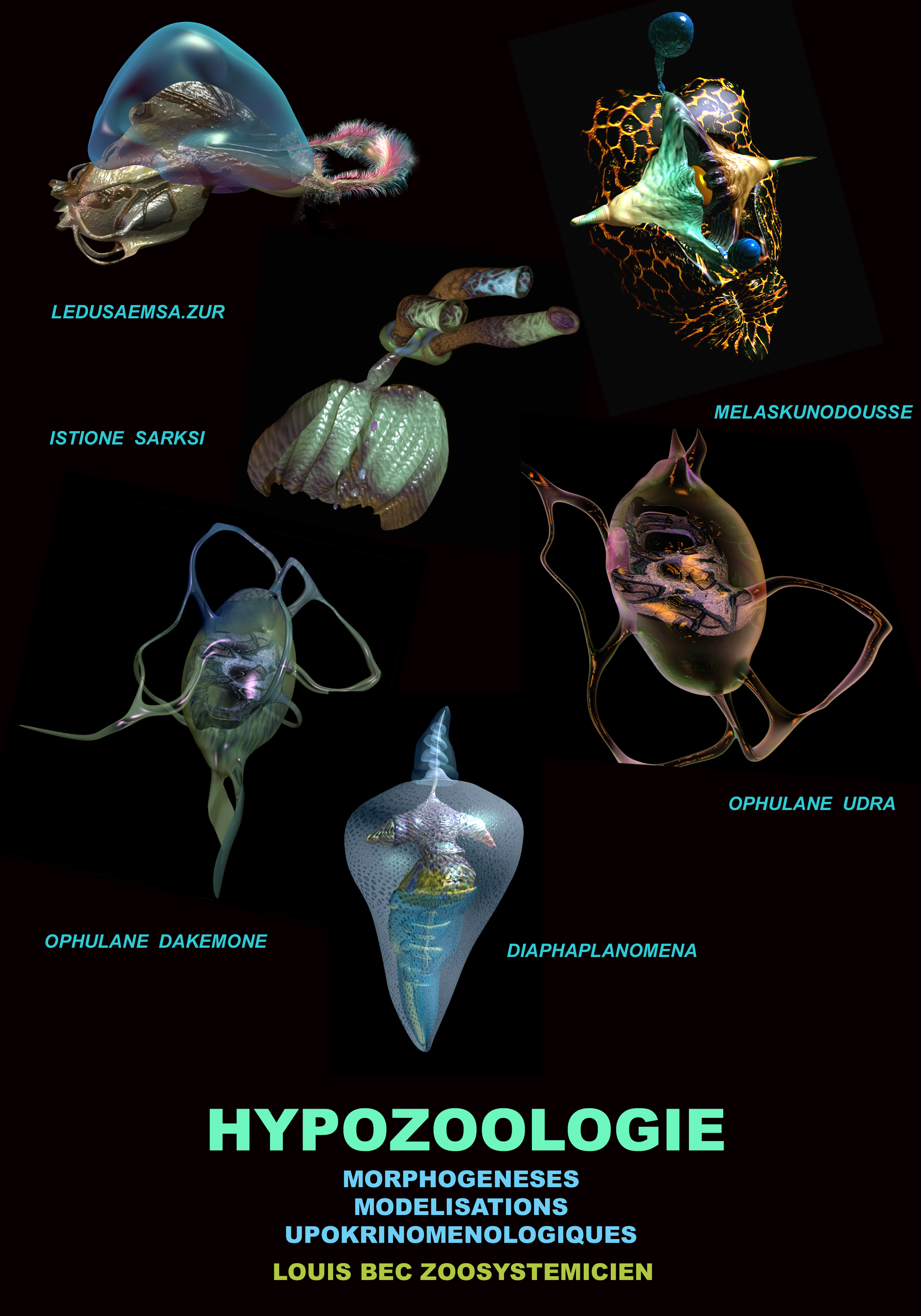
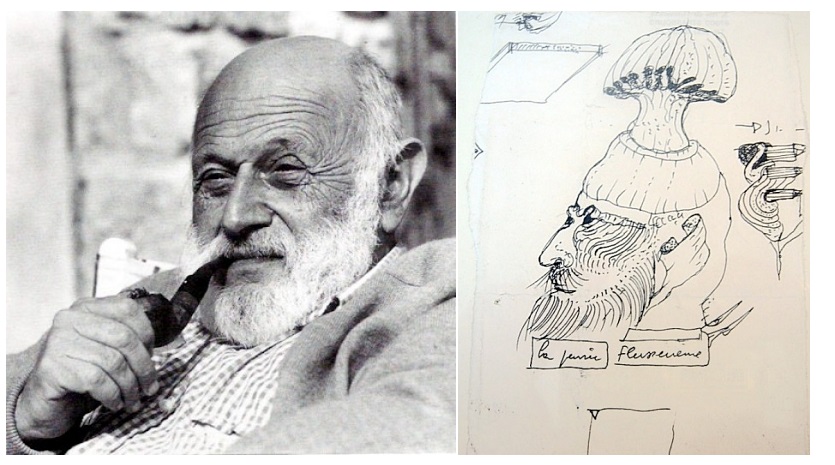
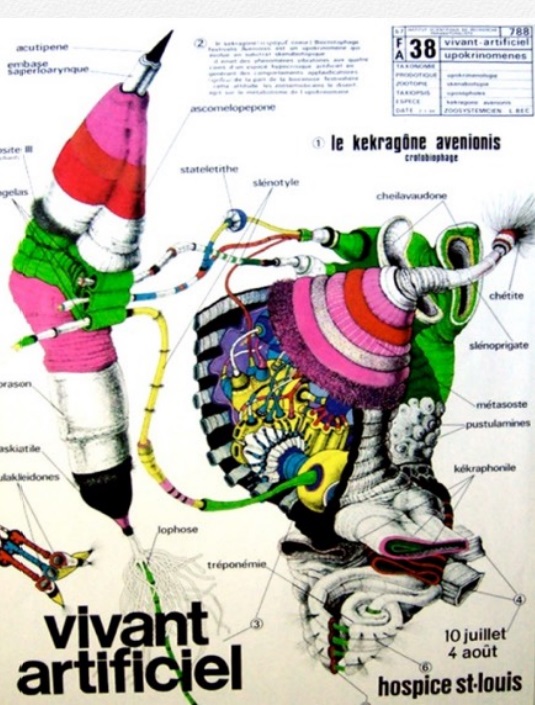
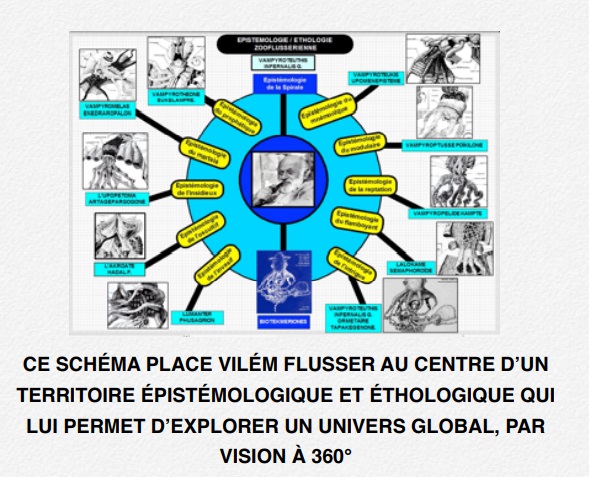
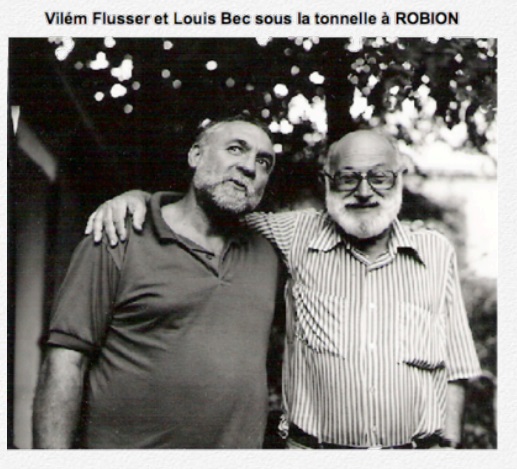
Louis Bec, who died three years ago, was one of Flusser’s closest friends, one of the few with whom he never quarreled, and the only one with whom he co-authored a book. They met every Saturday to exchange their ideas. This essay discusses Bec’s life, his creation of the “Institut Scientifique de Recherche Paranaturaliste”, his work as a “zoosytematician” and his theories about bio-art and artificial life, some of his artistic installations, such as the Sulfanogrades, as well as their most important project, the Vampyroteuthis infernalis. Their friendly and intellectual complicity lasted seventeen years: it is difficult to imagine what Flusser would have been without Bec, or Bec without Flusser.



Orthonature Paranature de Vilém Flusser / Vilém Flusser’s Orthonature Paranature
Flusser, La Force du Quotidien, Mame, 1973. Histoire d’une édition et d’une occasion manquée
This essay tells the story of Vilém Flusser’s first French publication, La Force du Quotidien, published in 1973 by the editor Mame. It is a collection of short phenomenological essays examining everyday objects such as mirrors, books, cars and beds.
L'échec des Rencontres de Robion (1981/82) : Un tournant pour Vilém Flusser? / The Failure of the 1981/82 Robion Encounters: A Turning Point for Vilém Flusser?
Settling in Robion in 1981, Flusser attempted to organize a summer event there, as a sort of laboratory of ideas related to the São Paulo Biennale. There was only one event, in August 1981, on the subject of analogies to language. This failure can be seen as a turning point for Flusser as far as his relationship with Brazil and with France were concerned: after 1982, the center of gravity of his intellectual and editorial life moved to Germany.
Les Rendez-vous manqués. Flusser, la France et la photographie
Flusser was based in France for the last sixteen years of his life. He spoke reasonably good French, but he published very little in France, either books or articles, gave few conferences or lectures, and never became part of French intellectual circles. While some of it may be due to his modest knowledge of French and to his living in a small southern village far away from Paris, the main reason is probably that he was an outsider, not a member of academia and not a thinker who could nicely fit in the “French Theory” dogma. Even after his death he did not attract much interest in French intellectual circles until recently. This essay analyzes this “missed encounter” principally from the viewpoint of photography; it notes however that interest in his concepts has been growing in France for several years, goes on to suggest ways to cultivate and extend this trend.